
McKinnon & Co Logo

Latest News

2026 Year-End Tax Planning Guide – Part 1
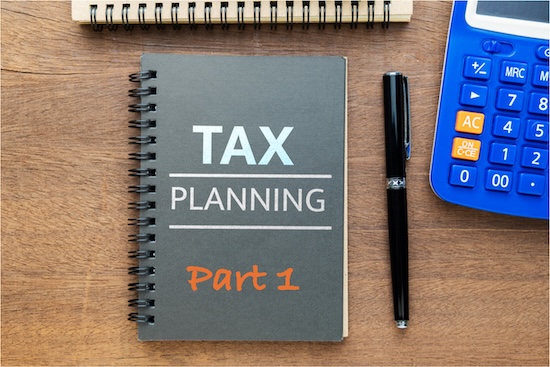
As the end of the financial year approaches, now is the ideal time to review your tax position and consider strategies that may help minimise tax and improve cash flow.

.

We recommend preparing an estimate of your taxable income for the year ending 30 June 2026. This can help identify any expected tax liabilities and highlight opportunities to legitimately reduce or defer tax.

It’s also worth reviewing your current income and deductible expenses to determine whether it may be beneficial to:

  • bring forward deductible expenses before 30 June; or
  • defer income until after 1 July 2026 where practical.

The strategies below are general in nature and may not suit every taxpayer. Their effectiveness will depend on your personal circumstances, business structure, turnover, and accounting method (cash or accruals). Importantly, some strategies require time to implement, so early planning is essential.

Tax Planning Opportunities to Consider

1. Deferring Assessable Income

In some situations, delaying income recognition until after 30 June 2026 may reduce your current year tax liability.

Possible strategies include:

  • Delaying invoicing for incomplete work until after 1 July
  • Deferring receipt of income where operating on a cash basis
  • Postponing receipt of lump sum payments where possible
  • Reviewing whether certain passive income streams (such as rent or interest) can be delayed

Where cash flow permits, this approach may help move taxable income into the next financial year.

2. Bringing Forward Deductible Expenses

Depending on your circumstances, it may be worthwhile prepaying certain expenses before 30 June 2026 to bring forward tax deductions into the current year.

Potential deductible prepayments include:

  • Superannuation contributions
  • Wages, bonuses, and contractor payments
  • Rent and lease costs
  • Insurance premiums
  • Accounting fees
  • Advertising and subscriptions
  • Utilities and office expenses
  • Motor vehicle costs
  • Repairs and maintenance
  • Self-education expenses
  • Home office equipment
  • Donations to deductible gift recipients

Superannuation Contributions

To claim a deduction for super contributions in the 2025/26 financial year, contributions must be received by the super fund before 30 June 2026.

Some low and middle-income earners may also qualify for a government super co-contribution when making personal after-tax contributions.

Prepaying deductible investment loan interest may also be worth considering in some circumstances.

As always, tax planning should align with genuine business or investment.

3. Capital Gains Tax Planning

When selling assets, remember that the contract date — not settlement date — generally determines when a capital gain or loss arises for tax purposes.

Key CGT Considerations

  • Assets held for more than 12 months may qualify for the 50% CGT discount for individuals.
  • Deferring the sale of an asset with an expected gain until a later financial year may reduce current year tax.
  • Capital losses can be used to offset capital gains and reduce tax payable.
  • Bringing forward the sale of loss-making assets may assist where gains have already been realised.

CGT Discount Rules for Individuals

For assets acquired after 21 September 1999:

  • Held less than 12 months → tax applies to 100% of the gain
  • Held 12 months or more → generally only 50% of the gain is taxable

Any capital gain is assessable in the financial year the CGT event occurs. Remember also that the 2026-27 Federal Budget outlined how the Federal Government is looking to change the way CGT is assessed in future years. Make sure you are aware of these changes.

4. Accounts Payable and Accrued Expenses

Businesses operating on an accruals basis should ensure all deductible expenses incurred before 30 June 2026 are properly recorded.

This may include ensuring supplier invoices are dated on or before 30 June so the deduction can be claimed in the current financial year.

Final Reminder

Effective tax planning takes time and should be tailored to your individual circumstances. Acting early provides greater flexibility and helps avoid rushed decisions at year-end.

If you are unsure which strategies may apply to you or your business, seeking professional advice before 30 June is strongly recommended.

Instant Asset Write-Off & Temporary Full Expensing

The instant asset write-off threshold for eligible small businesses remains at $20,000 for the 2026 financial year.

To qualify for the write-off, the following conditions generally apply:

  • The deduction applies to eligible plant, equipment, and motor vehicles only — it does not extend to capital improvements on buildings.
  • Both new and second-hand assets may qualify.
  • Assets can be purchased outright or financed.
  • The business must be actively operating during the 2026 financial year.
  • Aggregated annual turnover must be below $10 million.
  • The business must apply the simplified depreciation rules.
  • Each individual asset must cost less than $20,000.
  • The asset must be installed and ready for use between 1 July 2025 and 30 June 2026.

Importantly, businesses that opt out of the simplified depreciation regime will not be eligible for the instant asset write-off, even if they meet the other requirements.

The $20,000 threshold applies on a per asset basis, meaning multiple eligible assets may be immediately deducted provided each one falls below the threshold.

Assets costing $20,000 or more can still be added to the small business depreciation pool and depreciated over time — generally at:

  • 15% in the first year; and
  • 30% in later years.

Additional Tax Planning Opportunities for Businesses

Stock Valuation

Before 30 June, businesses should review stock on hand and work in progress to ensure inventory is valued correctly.

Stock should generally be recorded at the lower of:

  • cost; or
  • net realisable value.

Where stock cannot realistically be sold for its recorded value, it may need to be written down.

Superannuation Contributions

To claim a tax deduction for super contributions in the 2025/26 year, the funds must reach the super fund before 30 June 2026.

Electronic transfers made on 30 June may not clear in time, so contributions should ideally be processed several days earlier to avoid missing the deduction.

Writing Off Bad Debts

Businesses using the accrual accounting method should review outstanding debtors before year-end.

Amounts considered genuinely unrecoverable should be formally written off in the accounting records before 30 June 2026 to claim a deduction in the current financial year.

Repairs and Maintenance

Where practical and cash flow permits, consider completing deductible repairs before year-end.

It is important to distinguish between:

  • repairs and maintenance (generally immediately deductible); and
  • capital improvements (typically claimed over time through depreciation).

Professional advice may be required where the distinction is unclear.

Obsolete Equipment

Old or unused plant and equipment should be scrapped, disposed of, or decommissioned before 30 June 2026 where appropriate.

This may allow the remaining book value to be claimed as a deduction.

Trust Distribution Strategies

Businesses operating through discretionary trusts may wish to consider the use of a “bucket company” to receive trust distributions as part of broader tax planning strategies.

Careful planning before year-end can create valuable tax opportunities while ensuring compliance obligations are met.

Hot Issues

Careers

Want to join our team? Various opportunities and positions become available from time to time. Currently we have the following positions available:

Accountant

Key Responsibilities will Include:

  • Preparation of Financial Statements and Tax Returns for Individuals, Companies, Trusts, Partnerships and SMSFs.
  • Preparation of BAS/IAS.
  • Preparation of Budgets & Cashflows.
  • Liaise with clients.
  • Communicate with the ATO and other regulatory bodies.

You’ll Need:

  • Tertiary Qualification (Majoring in Accounting).
  • Ideally a minimum of 2 years industry experience.
  • Excellent communication and interpersonal skills.
  • Ability to plan and coordinate workload.
  • Experience working with a range of software programs.

Bookkeeper

Key Responsibilities will include:

  • Preparations of BAS/IAS.
  • Bank Reconciliations for our small business clients.
  • Liaising with the ATO and other regulatory bodies.
  • Payroll processing.
  • Providing support to clients.
  • Assisting accountants where necessary.

You’ll Need:

  • Demonstrated experience in a similar role, or previous experience working as a bookkeeper for a business.
  • Experience working with software programs including Xero, MYOB, Reckon and QuickBooks is highly desired.
  • High standard of written and verbal communication skills.
  • Meticulous attention to detail.

Graduate/Trainee Accountant

Key Responsibilities will include:

  • Preparation of Financial Statements and Tax Returns for Individuals, Companies, Trusts, Partnerships and SMSFs.
  • Preparation of BAS/IAS.
  • Liaise with clients.
  • Communicate with the ATO and other regulatory bodies.

You’ll Need:

  • Recently finished or currently studying towards your degree.
  • Motivation to undertake further study.
  • Excellent communication skills.
  • Eagerness to learn and high work ethic.

We offer full time, part time and casual employment options. All applications are treated with strict confidentiality.

If you are interested in applying for one of these positions, please email resume cover letter to accountant@mckinnonandco.com.au

Contact Us

Philippa Whitting

Director

Education: Bachelor of Commerce, JCU

Qualifications: CPA, CTA, JP

Philippa commenced work at McKinnon & Co in 1982. In her spare time she enjoys looking after her beef cattle enterprise, equestrian activities, and spending time with family.

Stephen Klaproth

Senior Accountant

Education: Bachelor of Commerce – Major Accounting & Finance, USQ.

Qualifications: CA

Stephen works in our business services areas as well as assisting with Audits. On the weekend he enjoys the Tablelands outdoor lifestyle.

Chloe Bidner

Senior Accountant

Education: Bachelor of Business – Major Accounting, JCU.

Qualifications: CPA, Xero Advisor Certified.

Chloe works part time at McKinnon & Co predominantly in Business Services. When she is not at McKinnons, she works in her family business – FNQ Honey & Bees

Margaret Blakey

Senior Accountant

Education: Diploma of Financial Planning (Financial Services)

Qualifications: JP

Margaret commenced accounting in 1990, and has experience in the accounting, finance, banking and financial services sectors. In her spare time, she competes in dance sport ballroom dancing, as well as spending time with her family.

Leanne Johnston

Accountant. Manager of BAS, Payroll & Bookkeeping Department.

Education: Bachelor of Business – Major Accounting, USQ.

Qualifications: Xero Advisor Certified. Diploma In Accounting.

Leanne has recently completed her accounting degree and is looking to expand her knowledge with further study. In her spare time, she enjoys horse riding and planning travel adventures.

Valerie Orreal

Manager of SMSF Department.

Education: Bachelor of Science, JCU

Qualifications: Diploma of Family History

Valerie looks after all aspects of SMSFs. In her spare time, she enjoys reading, camping and beach trips.

Alison Richardson

Client Service Assistant

Alison started at McKinnon’s back in 1981 and is our longest serving employee, providing integral support to the office and our clients. She loves spending time with her family and spoiling her grandchildren.

Rebecca Setford

Receptionist

Bec helps manage the day-to-day operations of our front office. She enjoys working hard and learning new skills. Outside of work she is a keen gym enthusiast.

Georgia Barbagallo

Receptionist

Our newest team member Georgia is enjoying learning the running of our front office. She is also studying Education and enjoys spending time with her adorable sausage dogs.

Accounting, Tax & Compliance

The right advice can make a significant difference to the bottom line of your business. Our team can take the complexity out of tax.

We can help with compliance work for:

  • Individuals.
  • Sole Traders
  • Partnerships.
  • Companies.
  • Trusts.
  • Self-Managed Super Funds.
  • Clubs & associations.
Contact Us

Business Advisory

We take the time to understand the current situation and future direction of each client. Our experienced staff will develop a range of services tailored to suit your needs.

We can provide advice and support on a range of areas such as:

  • Business structuring.
  • Tax consequences and obligations.
  • Business Recovery & turnaround.
  • Succession Planning.
  • Capital Gains.
  • Business Valuations
Contact Us

Self-Managed Superannuation Funds

We provide a comprehensive service, assisting in all aspects of your fund’s administration including all the paperwork, reporting and support in complying with super and tax laws.

We’ll support you in the administration of your fund by:

  • Processing investment paperwork throughout the year.
  • Consulting with share registries.
  • Corresponding with the ATO.
  • Processing paperwork and calculations in relation to the commencement and maintenance of pensions.
  • Preparing trustees’ minutes.
  • Preparing year-end financial statements.
  • Preparing and lodging the fund’s annual income tax and regulatory return.
  • Preparing and lodging the TBAR reports as required.
  • Preparing the fund minutes
  • Organising annual actuarial certificate and other documents as required.
  • Organising the annual independent audit.
Contact Us

Audit & Assurance

We provide high quality auditing services to help ensure that our clients meet regulatory and business requirements.

We are committed to providing independent, comprehensive, effective and efficient auditing. They have the knowledge and experience necessary to help you with all your financial reporting and accounting issues.

We provide auditing services for the following areas:

  • Clubs & Associations
  • Trust Audits including Real Estate & Solicitors.
  • Special Purpose Audits and Reviews.
  • Financial Statement Audits.
Contact Us

BAS, Payroll & Bookkeeping

We provide a range of options to meet your individual bookkeeping needs and ensure you are complying with all your reporting requirements. We work with a range of software’s and are happy to assist with whichever program you feel most comfortable with. Services we provide include:

  • Payroll Processing and support.
  • Superannuation processing – ensuring all staff super guarantee obligations met on time.
  • Preparation and lodgement of Monthly & Quarterly Business Activity Statements.
  • Bank Reconciliations and transaction coding.
  • Inputting of business records.
  • Assisting with software used to maintain records.
  • Set up of relevant Tax Registrations.
Contact Us

Business Start Up Assistance

We can take the stress out of starting a new business, providing a personalised start up tax service suited to your venture. We can assist with:

  • Advice on Business Structure.
  • Applying for ABN, TFN.
  • Set up of Tax registrations including GST, PAYG Withholding and FTC.
  • Set up of WorkCover and Super clearing house.
  • Taking care of company set up requirements.
  • Advice on ongoing obligations.
Contact Us

Tax Diary

General Calculators


Accounting Videos

Tax Deductions by Job

Secure File Transfer

Secure File Transfer is a facility that allows the safe and secure exchange of confidential files or documents between you and us.

Email is very convenient in our business world, there is no doubting that. However email messages and attachments can be intercepted by third parties, putting your privacy and identity at risk if used to send confidential files or documents. Secure File Transfer eliminates this risk.

Login to Secure File Transfer, or contact us if you require a username and password.

Latest Newsletter

June 2024

Archive

General Disclaimer

The material on this website has been prepared for general information purposes only and not as specific advice to any particular person. Any advice contained on the website is General Advice and does not take into account any person’s individual investment objectives, financial situation or needs.

Before making an investment decision based on this advice you should consider whether it is appropriate to your particular circumstances, alternatively seek professional advice.

Privacy Policy

McKinnon & Co is committed to providing quality services to you and this policy outlines our ongoing obligations to you in respect of how we manage your Personal Information.

We have adopted the Australian Privacy Principles (APPs) contained in the Privacy Act 1988 (Cth) (the Privacy Act). The NPPs govern the way in which we collect, use, disclose, store, secure and dispose of your Personal Information.

A copy of the Australian Privacy Principles may be obtained from the website of The Office of the Australian Information Commissioner at https://www.oaic.gov.au/.

What is Personal Information and why do we collect it?

Personal Information is information or an opinion that identifies an individual. Examples of Personal Information we collect includes names, addresses, email addresses, phone and facsimile numbers.

This Personal Information is obtained in many ways including correspondence, by telephone and facsimile, by email, via our website www.mckinnonandco.com.au, from your website, from media and publications, from other publicly available sources, from cookies and from third parties. We don't guarantee website links or policy of authorised third parties.

We collect your Personal Information for the primary purpose of providing our services to you, providing information to our clients and marketing. We may also use your Personal Information for secondary purposes closely related to the primary purpose, in circumstances where you would reasonably expect such use or disclosure. You may unsubscribe from our mailing/marketing lists at any time by contacting us in writing.

When we collect Personal Information we will, where appropriate and where possible, explain to you why we are collecting the information and how we plan to use it.

Sensitive Information

Sensitive information is defined in the Privacy Act to include information or opinion about such things as an individual's racial or ethnic origin, political opinions, membership of a political association, religious or philosophical beliefs, membership of a trade union or other professional body, criminal record or health information.

Sensitive information will be used by us only:

Third Parties

Where reasonable and practicable to do so, we will collect your Personal Information only from you. However, in some circumstances we may be provided with information by third parties. In such a case we will take reasonable steps to ensure that you are made aware of the information provided to us by the third party.

Disclosure of Personal Information

Your Personal Information may be disclosed in a number of circumstances including the following:

Security of Personal Information

Your Personal Information is stored in a manner that reasonably protects it from misuse and loss and from unauthorized access, modification or disclosure.

When your Personal Information is no longer needed for the purpose for which it was obtained, we will take reasonable steps to destroy or permanently de-identify your Personal Information. However, most of the Personal Information is or will be stored in client files which will be kept by us for a minimum of 7 years.

Access to your Personal Information

You may access the Personal Information we hold about you and to update and/or correct it, subject to certain exceptions. If you wish to access your Personal Information, please contact us in writing.

McKinnon & Co will not charge any fee for your access request, but may charge an administrative fee for providing a copy of your Personal Information.

In order to protect your Personal Information we may require identification from you before releasing the requested information.

Maintaining the Quality of your Personal Information

It is an important to us that your Personal Information is up to date. We will take reasonable steps to make sure that your Personal Information is accurate, complete and up-to-date. If you find that the information we have is not up to date or is inaccurate, please advise us as soon as practicable so we can update our records and ensure we can continue to provide quality services to you.

Policy Updates

This Policy may change from time to time and is available on our website.

Privacy Policy Complaints and Enquiries

If you have any queries or complaints about our Privacy Policy please contact us at:

admin@mckinnonandco.com.au

07 4091 1244